

What Killed My Tree?
When a tree starts declining, insects and diseases often get the blame. However, the underlying cause is frequently related to environmental conditions and how the tree is being cared for.
#1 Overwatering
Trees, especially evergreens, need air around their roots and need to dry out between waterings. One deep soak every two weeks is perfect.
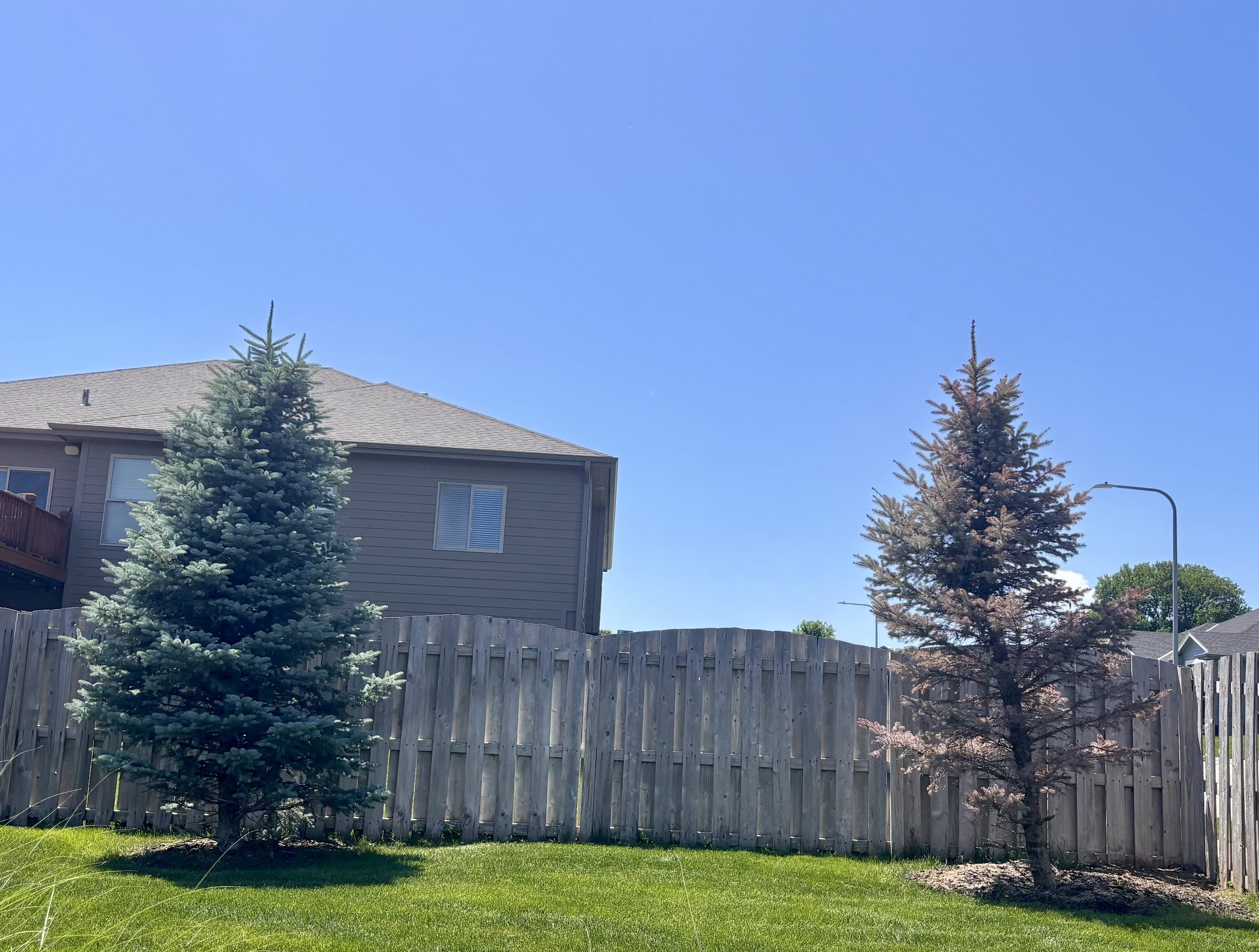
Many people set their lawn sprinklers to water every day or every other day, which is far too much. The consistent moisture in our heavy clay soils means the ground never dries out. After being saturated for weeks, the outer ends of the roots begin to rot and die.
Eventually, the only roots left alive are the few near the base of the tree, which are not enough to sustain it.
In September, people winterize their irrigation systems and forget about their landscapes. Then we get a warm, dry fall and winter. Evergreens continue losing moisture through their needles, but they can no longer pull enough water from the soil because much of their root system rotted away the previous summer.
Most evergreen trees actually die between December and March. They simply do not start turning brown until March, April, or May. This is why we see so many dead evergreens in the spring.
#2 Underwatering
Trees planted on non-irrigated sites, acreages, parks, or commercial properties need a deep soak every two weeks.
Sometimes we assume our irrigation system is watering a tree, but it may only be spraying the foliage on one side. Trees planted on hilltops and slopes need even more attention because water runs off quickly and the soil dries out faster.
Trees on south-facing and west-facing slopes are exposed to more sun, causing the soil to become hotter and dry out more quickly. These trees often need additional watering.
Planting twenty new trees on an acreage sounds great until you realize how much hose dragging is required every two weeks. Then vacations happen, and watering gets forgotten.
Many people underestimate how much water it takes to soak the soil 18 inches deep. As a minimum, remove the nozzle and run the hose at full blast for one to two minutes per tree.
#3 Compaction
Foot traffic, dog traffic, car traffic, mower-path compaction, construction activity, retaining walls, and new paver walkways can all damage root systems and kill trees, both young and old.
Look at the canopy above the tree. The root system below the tree is often just as extensive.
Avoid disturbing, walking on, or compacting the soil within the tree's drip line. Remember, tree roots need oxygen.
FINAL THOUGHTS
Turn down your lawn irrigation if it is drowning your trees.
Stick a screwdriver 6 inches into the ground.
If the soil is wet, muddy, or sticking to the screwdriver, turn off the water.
If the soil is dry, dusty, or hard and compacted, it is time to water.
Water less in the spring and summer.
Water more in the fall and winter.
Use the screwdriver test!
Need Help Diagnosing a Tree Problem?
Jensen Gardens' certified arborists can evaluate your trees, identify potential issues, and recommend solutions to protect your landscape investment. Whether it's watering concerns, root damage, pests, or disease, our team is here to help keep your trees healthy for years to come.
Contact Jensen Gardens today to schedule a tree health evaluation.