

Winter Pruning Tips for Trees
Winter is an ideal time for pruning trees and shrubs, offering numerous benefits for plant health and maintenance. When plants are dormant during the winter months, their sap flow slows, allowing for the removal of old or damaged growth without impacting their energy reserves. Additionally, the risk of infection from insects or disease is minimized during this time, as these threats are also inactive in colder temperatures. With the ground often frozen and foliage absent, pruning is more efficient and causes less damage to surrounding turf while reducing the need for cleanup.
Key benefits of routine tree trimming include:
Improved tree health by removing dead, damaged, or diseased branches before problems spread
Stronger structure that reduces the risk of limbs breaking during storms or under heavy snow
Better air circulation and sunlight to promote healthy growth
Increased safety by eliminating hazardous branches near homes, driveways, and walkways
Enhanced appearance that keeps your landscape looking clean and well cared for
Safety First
Pruning large trees can be hazardous work, even for experienced arborists, especially if climbing is involved. For major pruning jobs, it’s best to hire a professional arborist. When selecting an arborist, prioritize those certified by a professional organization, as certification signifies expertise and dedication to tree care.
What to Prune
Focus pruning efforts on removing broken, damaged, rubbing, or dead branches. Pruning may also be necessary to elevate branches over sidewalks, streets, roofs, or other structures. Avoid unnecessary thinning or “lion tailing,” as this can make trees vulnerable to environmental stress during warmer months. If pruning live branches, never remove more than 20% of the total leaf area of a tree’s crown at one time. For larger jobs, consider spacing the work out over several years to minimize impact on the tree.
Making Proper Pruning Cuts
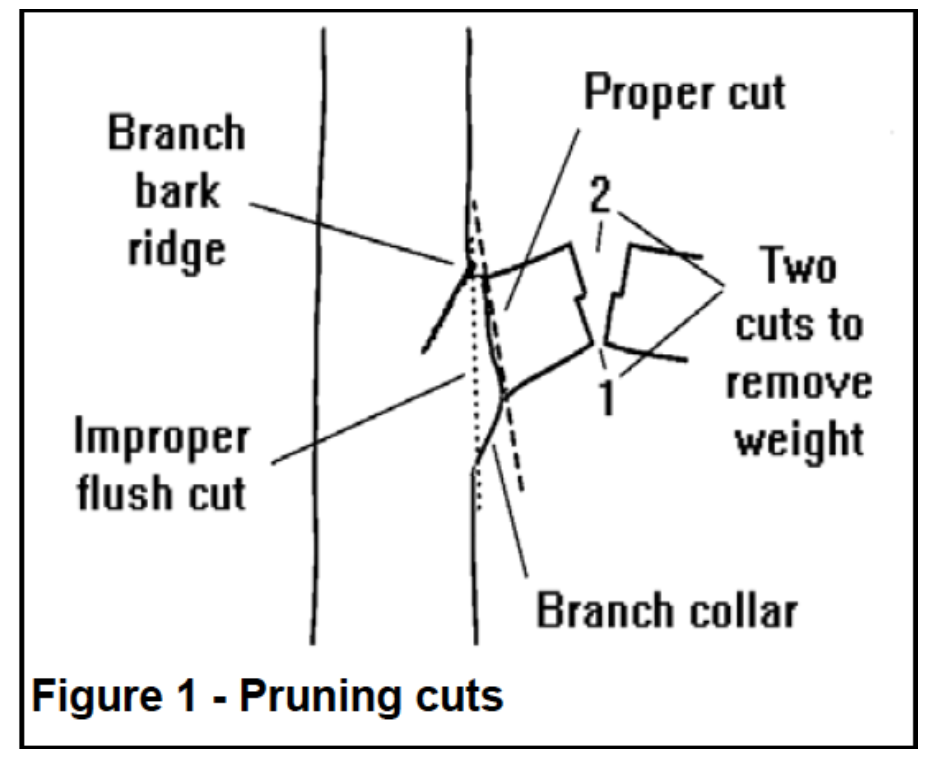
Proper pruning cuts are essential to minimize tree injury and encourage effective healing. Cuts should remove only branch wood without harming the trunk or supporting stem. To do this, identify the branch bark ridge and branch collar. Make cuts just outside the branch bark ridge while angling down and away from the stem, ensuring the branch collar is preserved. Avoid making flush cuts, as they can create larger wounds that are harder for the tree to seal, increasing the risk of decay.
When to Prune
Winter pruning allows trees a full growing season to recover and heal. While pruning can technically be done whenever your tools are sharp, avoid pruning during the active spring growth period (April and May) when bark is tender and easily damaged. Similarly, refrain from pruning in the fall coloration period, when decay risks are elevated. If oak wilt is a concern in your area, do not prune oaks between April and June to prevent disease spread.
When Tree Removal Is the Right Choice
While trimming can solve many issues, there are times when tree removal is the safest and most responsible option. Trees that are severely damaged, diseased, dying, or structurally unsound can pose a serious risk to people and property. In some cases, removal is also necessary to make room for new construction, improve sunlight, or protect nearby healthy trees.
Our team evaluates each situation carefully and recommends removal only when it is truly necessary. Safety, proper technique, and protecting the surrounding landscape are always top priorities.
Trust the Professionals
Tree trimming and removal require experience, training, and the right equipment. Proper pruning techniques protect the long-term health of your trees and ensure work is done safely. Whether your trees need routine maintenance, storm damage cleanup, or removal, working with professionals helps protect both your landscape and your property.
If you are unsure what your trees need, our team is happy to help. We offer professional tree trimming and tree removal services tailored to your specific landscape. Reach out to schedule an evaluation and keep your trees healthy, safe, and looking their best year-round.